Posts

Showing posts with the label Fungus

Mushroom Month

Image
  Found this big boy on a walk through the forest we were camping in - if my research is correct, it is an amanita aprica, which grows in a mycorrhizal association with Doulgas fir and pines. Mycorrhizae are a symbiotic relationship between plant roots and fungi. These ones are harder to identify. A search regarding mushrooms on tree bark with moss did not return any clear results.  They could be puffballs. I came across a local foraging expert and cookbook author, Hank Shaw. Hunt Gather Cook And he recommends  this  pocket guide. Shaw states that foraging is a matter of time, not difficulty, but of course one must be cautious as well.  "You start with a very few edible mushrooms you are looking for, and you expand your knowledge bit by bit."  For the fall, he suggests keeping an eye out for porcinis. Podcast: Get into Mushroom Hunting

Science is Fun Fridays!

Image
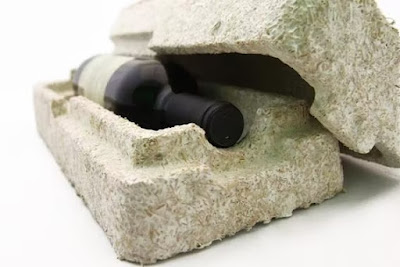
  Fungi packaging is the styrofoam replacement we need. Mycelium is combined with agricultural feedstock, such as hemp hurds, to create water-resistant and insulating material.  It is 100% biodegradable, composting in about 30 days when added to soil. Companies such as IKEA and Dell have already committed to the change.  There appears to be quite a few companies in the business of making such products, such as Ecovative. "We are reducing plastic pollution with the power of mushrooms." Link It appears this isn't breaking news, but I only just heard about IKEA. And hey, #FungiFriday Mycelium is the root structure of mushrooms, and here it is spreading.

Science is "Fungi" Fridays!

Image
 Under the ground, across the whole planet, is a network of fungal threads called mycelium. These connect different plants, and different species, across a forest floor. They will help plants locate water and will direct nutrients when needed.  Trees can warn one another about infestation so they can produce the chemicals that will protect them.  The plants interact and help one another survive.  It's even been suggested that plants and fungi can identify their spawn, and specifically supply nutrients to make sure they thrive through the network. "It holds the consciousness of nature's connection to all living things." It is much like our own consciousness, the neural networks in our brains that keep our bodies functioning and acting. It is also much like the internet, a superhighway of vital information, the web of life. Mycelium's vast structural network is responsible for creating top soil, decomposing plant debris, and providing nutrients to the plants and t...

Science is Fun Fridays!

Image
 #FungiFriday Ice Hair occurs when ice crystals meet a fungus called Exidiopsis effusa. It grows on humid winter nights when the temperature is just below freezing. The fibers can grow up to 8 inches long and are about the same thickness as human hair. Scientists believe the process involves a "recrystallization inhibitor" provided by the fungus. Chemical analysis suggests that as the fungus breaks down the wood, it produces complex molecules like lignin and tannin, which can mix with liquid water and stops the ice strands from bunching up. The hairs form along the wood rays, not on the bark.  Wood rays are cellular structures found in some wood species, and are perpendicular to the growth rings, radiating from the center of the log. IFLScience Insta Wiki

Science is Fun Fridays!

Image
Cryptococcus neoformans, radiotrophic fungi found on the walls of Chernobyl's reactor. Scientists have known about this fungus since 2007 - it decomposes radioactive material such as the hot graphite in the remains of the reactor.  Very dark melanin pigment absorbs radiation and processes it harmlessly for energy.  Scientists hope to mimic this process for radiation/sun blocking as well as for a renewable energy source. Outside the exclusion zone, the fungi has less melanin, suggesting it adapted to the radiation.  Other studies have shown that the fungi grows faster with the radiation, and they point their spores towards the source - they love it. NASA has been researching this and have been growing the fungus on board the International Space Station.  The ambient radiation there is high compared to Earth's surface, and understanding how we could use the fungus has great potential for future space travel. Radiation Reference: On average, we ar...