Posts

Showing posts with the label Plants

Science is Fun Fridays!

Image
  I read an article about a movie that recently came out, a fictionalized account of understanding plant consciousness. "Researchers tend to define consciousness loosely as the ability to experience - the subjective, ineffable feeling of being alive." From the neural network mycelium provides, to the physical responses plants can have to the world around them, there is definitely a sense of being alive. I was once ridiculed by a behavioral psychologist for suggesting an animal's thought process, because to him there was no such thing.  But even if it's different than how we think, I do believe it is evident in other life forms.

Pascua Florida

Image
Today commemorates the naming of the state - when Juan Ponce de Leon landed he was struck by the abundance of plant life, but he also wanted to honor the upcoming Easter holiday. "Pascua" on its own means Passover.  Pascua Florida is the Feast of Flowers.  Very Spring. The year was 1513, and when de Leon returned to Spain in 1514 he was knighted by King Ferdinand, named governor of Puerto Rico, and granted permission to settle in Florida.  He wasn't able to return until 1521, but the native population fiercely resisted the European presence, and he was fatally wounded. He is buried in Puerto Rico. The Calusa were people of the Caloosahatchee culture, which is now an extinct tribe. They were described more by Pedro Menendez de Aviles, who would establish St. Augustine in 1565.  He visited their capital, Calos, in 1566 and described the chief's house, their council, as well as their clothing. The chief offered his daughter in marriage, understanding this would secure a...

World Wildlife Day

Image
  Medicinal and aromatic plants are essential for both human health and ecological balance. Plants are the foundation of many healthcare systems, and vital to modern pharmaceuticals, as numerous active drug compounds are derived directly or indirectly from natural sources, despite advancements in synthetic chemistry. Plants also contribute to various industries, such as cosmetics and luxury goods.  Genetic resources have been used for diverse applications in agriculture, medicine, and conservation. Ensuring the sharing of benefits arising from this use is Target 13 of the Kunming-Montreal Global Biodiversity Framework. Cultivation and harvest practices secure vital resources for many households, where 1 in 5 relies on wild plants, algae, and fungi for their food and income.

Science is Fun Fridays!

Image
  ESA's newly operational Biomass satellite is able to distinguish between different types of vegetation using polarized radar. The image above is around the Beni River in Bolivia.  The water is black and rainforests are green, while the grasslands are purple and the wetlands are red. A key goal of this satellite mission is to measure how Earth's carbon-rich areas are shifting.  With these views, it will be easier to quantify the scale of deforestation, for example. Clockwise from the top left: Mount Gamkonora in Indonesia, the Tibesti Mountains in Chad, the Ivindo River in Gabon, and the Nimrod Glacier in Antarctica. Biomass

Science is Fun Fridays!

Image
The Atacama Desert in Chile is known as the driest place on Earth. But after an especially rainy winter, it is experiencing a bloom. The rain was enough to activate bulbs and latent seeds that were hidden beneath the surface for years.  According to the National Forestry Corporation, it may have awakened a seed bank that had been dormant for a long time. The above includes violet guanaco paw and white huille, but there are more than 200 species expected to appear, many of them endemic, creating a "true chromatic mosaic of ecological and scientific value." And it is expansive.  

Science is Fun Fridays!

Image
New research reveals that the modern potato evolved from a fling with a wild tomato over 9 million years ago. Evolutionary biologists and genomic scientists analyzed 450 genomes from cultivated and wild potato species and they were able to trace it back to an ancient ancestor. The original Etuberosum and the tomato did not grow tubers - but the resulting hybrid plant did. Coming from the Andes mountains, the tuber was an innovative way for the potato to store nutrients underground as the climate became colder. Potatoes were domesticated some 10,000 years ago, becoming a key crop the world depends on.  

Science is Fun Fridays!

Image
  The "Wooly Devil" is the first new plant genus to be discovered in a US national park since 1976. It was confirmed last year in Big Bend National Park, Texas. It was initially found near an area known as the Devil's Den.  It's scientific name is Ovicula biradial. Turns out, it's a member of the sunflower family. It blooms after rain, so "as climate change pushes deserts to become hotter and drier, highly specialized plants like the wooly devil face extinction," said Dr. Isaac Lichter Marck. It has so far been documented in three narrow locations across the northernmost corner of the park.

National Daisy Day

Image
 Daisies were once considered a weed, but then their beauty became appreciated along with their medicinal qualities.  Some varieties are edible, eaten in salads or used to decorate cakes. Wild daisy tea can be used to treat cough, kidney problems, bronchitis, inflammation and problems with the liver.  Daisy extracts have been used for arthritic joints and aches as well as childbirth pain, and can be applied to healing wounds and scrapes.  Ox-eye daisy can be applied directly to the skin to treat pain, swelling, and burns. Daisies were popular in ancient Egypt, depicted in some artwork from 1550 BC. The first daisies in art appear in carvings from 3000 BC. Vase with Daisies and Poppies, Van Gogh, 1890.

Science is Fun Fridays!

Image
  Work is underway for a seaweed farm, within a wind farm, off the coast of the Netherlands. The area, known as Hollandse Kust Zuid, or HKZ, includes 139 wind turbines. "The integration of seaweed cultivation with offshore wind farms offers an opportunity to resolve space constraints for the seaweed sector in coastal areas, with additional potential for atmospheric CO2 uptake," explains Professor Ana Queirós, Marine and Climate Change Ecologist. Data from this project will help scientists further research carbon reduction and sequestration. There's also the expected production of 13,000 pounds of fresh seaweed, a food source which is growing in popularity.  Proteins such as spirulina and chlorella contain all of the essential amino acids, and the plant also provides B12 and omega-3 fats. I've tried a seaweed snack, and they're not bad. A 2021 UK report suggested that the seaweed market could be worth around $10 billion by 2030, create 115,000 jobs, and deliver hea...

Pineapple Day

Image
  Indigenous to South America, the pineapple has been cultivated for centuries, as far back as 1200 BC in Peru. It carries deep rooted cultural significance as well, symbolizing warmth and welcome.  In the Caribbean, it represents friendship. Christopher Columbus was the first European to encounter the fruit, and he brought it back to Spain, calling it piña de Indes, pine of the Indians. It was later documented in 1568, when French explorer Andrè Thevet wrote of the Tupinamba people, living near modern day Rio de Janeiro, who cultivated and ate Hoyriri.  The natives must have recognized the health benefits - packed with Vitamin C and bromelain (which aids in digestion and reduces inflammation) as well as manganese. In the Philippines, the long leaves' fibers were used to weave fabrics that were a luxury export. Pineapples are pollinated primarily by hummingbirds, with some pollinated at night by bats.  Night is also when the pineapple carries out CAM photosynthesis -...

Science is Fun Fridays!

Image
  The oldest known marine plant has been discovered in the Baltic Sea, at 1400 years old. This seagrass, known as eelgrass, produces ramets, an individual member of a clone that can separate and become capable of independence. Genetic variation within these ramets can be used to age them, using a genetic clock.  As mutations occur they become fixed and accumulate in descendant ramets.  The clock compares the plant to the descendants and ages it based on their differences. The team is continuing their study and expect to find even older seagrass. This is all part of an ongoing effort in the scientific community to locate and document the oldest of living things before they're possibly gone forever.

My Shots - May Blooms

Image
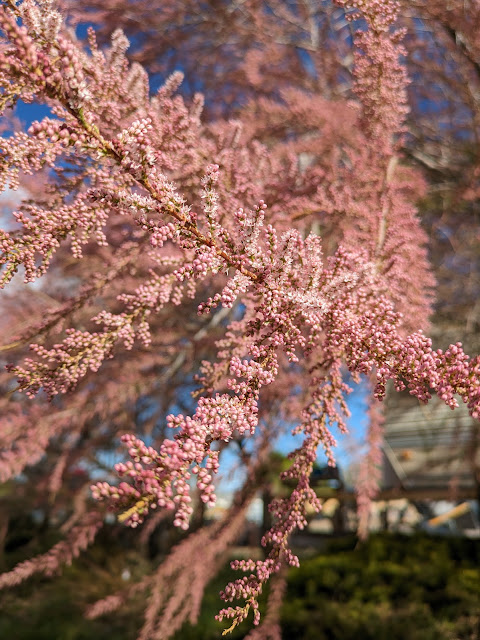
  Tamarisk at home. Desert peach. Trees at the park. I'll be off tomorrow so Hubby and I can go camp and enjoy this beautiful warm up!

Science is Fun Fridays!

Image
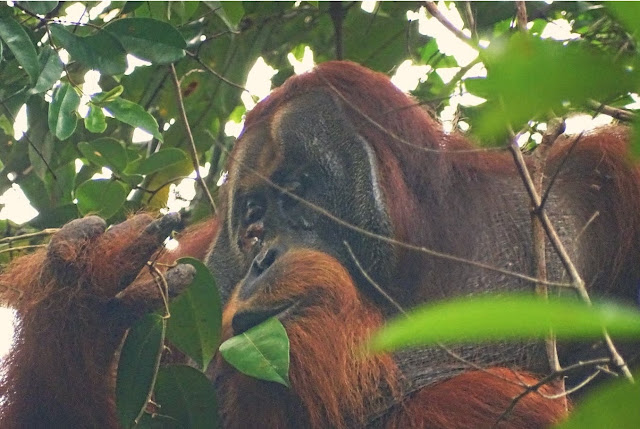
  Rakus is a wild Sumatran orangutan who was found with a wound to his cheek, likely the result of a fight for dominance. He was seen chewing the leaves of the Akar Kuning plant, and applying them deliberately to his wound.  Within three weeks, he was completely healed. Sumatrans know the plant for preventing infection, as well as in treatment for malaria, dysentery, and diabetes.  Orangutans appear to be avid users of medicinal plants, but this is the first time such specific application has been witnessed. There have been reports of Bornean orangutans chewing Dracaena cantleyi leaves and rubbing the lather on their arms and legs.  According to Indigenous peoples in the area, it is used to treat sore muscles and bone pain.

My Shots - Amaryllis

Image
  I was gifted a wax bulb for Christmas, along with other gals in my family.  Turns out I have the best sun window for it. I've been documenting for my aunt. Unless another stalk shoots up, I think four will be the flower. ❤️

Science is Fun Fridays!

Image
  The search for a long lost and rare species of orchid, Dendrobium azureum , led scientists to the summit of Mount Nok in Indonesia.  It hadn't been seen in 80 years, and Dr. André Schuiteman has been on a mission to track down orchids. But there was a bonus to be found as well.  A brand new species! Dendrobium lancilabium Subspecies "wuryae," in honor of Hj. Wury Estu Handayani Ma'ruf Amin, for her contributions to the conservation of orchids in West Papau province. Schuiteman and his team have named nine other orchid subspecies from Indo-China and Southeast Asia since December 2022. "It is imperative now, more so than ever, that we do everything in our power to go out into the field with our partners and work out which species of plants and fungi we haven't given a scientific description yet," says Dr. Martin Cheek. Both doctors work for the Royal Botanic Gardens in Kew. Profile Profile

Science is Fun Fridays!

Image
  Back in 2019, China's Chang'e 4 lander planted cotton seeds on the lunar surface, (but not in lunar soil). It only took a couple weeks for the plant to sprout, marking the first biological experiment on the moon. But additional study was needed to determine if lunar crops are less productive or more fragile than those on Earth.  And now, two new papers suggest that the plant may actually prefer low gravity. By comparing growth in replicated conditions on Earth, they found the less gravity speeds up germination.  There also seemed to be no issue with the long lunar night, which can drop to -61* and last about 18 days - the plant was still green and upright when light returned.  Back on Earth, the plants died. The researchers suspect the low gravity triggered a freezing resistance some polar plants have developed. The lander also planted rapeseed, potato, and rock cress - none of which took. Experiments on the International Space Station have already shown that plant...

National Pumpkin Day

Image
  From the local Ferrari Farms. Tonight is, in fact, our pumpkin date, but I haven't decided if I want to carve or paint.  I both love and hate cleaning out the pulp and seeds. If I go for it, the leftovers can be good for the  pups . All the animals love 'em! Pumpkins are native to North America and are one of the oldest domesticated plants. Carving vegetables, usually turnips, for Jack-o'-lanterns is an old tradition from Samhain. In the US, it was done more for harvest season before it became a Halloween symbol.

Happy 420!

Image
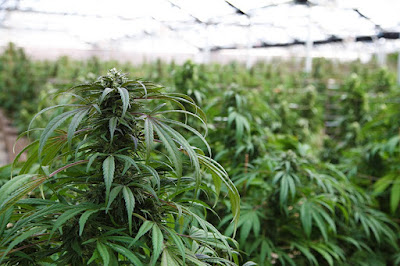
  Local grow and dispensary in Washoe Valley.  They threw a 420 party one year when it fell on a weekend, and they will be the first location in Nevada to receive a consumption lounge license.  They have a lovely balcony that I look forward to partaking on. Sol on Instagram There is no one explanation for why pot smokers celebrate the day. One theory comes from a group of teenagers in California who would gather at 4:20pm to toke up.  One of those kids then became a roadie for The Grateful Dead, and at one show in 1990, they handed out flyers to meet on 4/20 at 4:20. One recipient was Steven Bloom, reporter for  High Times , a marijuana magazine.  Once they printed the date, it became part of the culture. The magazine was founded in 1974. Other 420 theories refer to a California police code and a Bob Dylan song: Rainy Day Women #12 and 35 12x35=420 and the lyrics state, "everybody must get stoned." Nowadays, there are many ways to get stoned.  Edibles ...

Art Class - Floral Design

Image
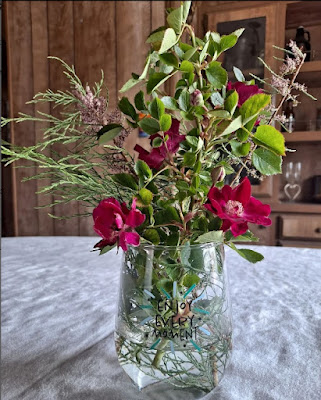
  Just a little bouquet I made from my yard. Because today we're celebrating the birthday of Carl Rittner, founder of the Rittner School of Floral Design in Boston. In Massachusetts, the governor officially proclaimed National Floral Design Day in 1995. The school claims they are "the real thing," not just classes offered in the back of some floral shop.  They teach for the business entrepreneur, the hobbyist, or someone just looking for some relaxation. Surely you've seen or even received a beautiful and creative arrangement. Here are a few from their Facebook. Dead, real, or fake flowers - drawings, paintings, etc - get your art on! Floral School

Science is Fun Fridays!

Image
  The Unrecognized Value of Grasslands They create and stabilize fertile soil as well as provide animal habitat, building materials and food. They store carbon and generate oxygen, but trees are often prioritized in climate change mitigation. Land use conversion threatens these natural pastures, although cultivated fields still dominate modern agriculture. In tropical climates, the grassland is called the savanna.  Short grass regions are called steppes while tall grass regions are called prairies. There are also submarine meadows. Grasses provide nitrogen necessary for animals to build proteins and other important body chemicals. The carnivores then get the nitrogen from those animals. Science