Posts

Showing posts with the label Conservation

World Conservation Day

Image
  "Conserving the lands and waters on which all life depends." The Nature Conservancy Community Backlash to AI Data Centers Is Growing Across the U.S. When we were checking in on the eagles earlier this year, I mentioned Friends of Big Bear Valley were raising money in order to protect Moon Camp, and they met their goal! "63 acres of undisturbed forested open space and shoreline used by Jackie and Shadow."

Science is Fun Fridays!

Image
  Often called the "rainforests of the sea," coral reefs are just as important, supporting over 25% of marine life.  If an area of the Amazon turned white, we would be concerned. But scientists have been fighting for years to make us understand the global red flag of dying reefs. When they collapse, it's not just a loss of biodiversity, it's a loss of human food security and coastal safety. The  Allen Coral Atlas  is powered by Arizona State University, originally conceived by Paul Allen. Teams have mapped reefs across the globe, and continue to monitor for bleaching events.  All it takes is a 2 degree rise in water temperature for the corals to stress react by purging the algae that lives within it. The algae is what produces 90% of the coral's energy through photosynthesis.  Without the algae, the polyps turn clear, so all we see is the skeletal structure.  Without enough energy to eat, the coral will eventually die. Okay, so not fun-filled informati...

Animal Life - Whooping Crane

Image
 Today celebrates one of the tallest and rarest birds in North America. They are currently endangered, but conservation efforts have improved the populations. Back in the 1800's, habitat loss and hunting drastically reduced their numbers.  By 1860, there were only 1,400 - but the all time low was just 15 birds in 1941. They were all from one flock, which migrated between Canada and Texas, so local, federal, and international governments were involved in protecting them. Scientists realized they couldn't rely on just one flock, so they tried introducing the cranes in Idaho, but that didn't work.  A flock set up in Florida did succeed, but would not migrate. The International Whooping Crane Recovery Team determined they had to teach the chicks, so they used an ultralight aircraft and led them from Florida to Wisconsin. In 2002, the first wild Whooping Crane since 1939 was hatched.

Animal Life - Jane Goodall

Image
  Jane Goodall passed away yesterday at the age of 91. In October 1960 she was in Tanzania's Gombe National Park observing chimpanzees. In fact, she witnessed them using tools and making tools - behaviors previously thought to be exclusive to humans. Goodall revolutionized the study of chimpanzees and forced science to reshape its views, thus forcing us to change the way we see animals. She remained in Gombe, more or less, until 1975.  Her assignment had come from paleoanthropologist Dr. Louis Leakey.  He wanted to better understand how humans' Stone Age ancestors may have behaved.  Goodall was not formally trained, had no college degree, but Leakey believed this would lead to more open-minded research, as she wasn't biased by traditional scientific wisdom. A global advocate for the environment, conservation, and peace - she spent the majority of her life dedicated to helping all wild animals. Thank you, Jane.

Animal Life - Peregrine Falcons

Image
On this day in 2000, the peregrine falcon was removed from the endangered species list. On the Great Spirit Bluff overlooking the Mississippi River in Minnesota, four were hatched in May. Falcons will stay in the nest for 5-8 weeks before fledgling.  They remain dependent on their parents for another 4-6 weeks for food and to learn hunting skills. So this cam isn't actually live anymore, but it seems to be playing through different stages. The banning of DDT helped play a role in the recovery of peregrine populations.  The pesticide accumulated in their bodies through the food chain, which led to thin-shelled eggs that would break during incubation. Peregrine Fund

Science is Fun Fridays!

Image
  One of the ways scientists protect our planet's wild ecosystems is by collecting vast amounts of audio, dense with vocalizations from birds, frogs, insects, whales, fish and more.  Google has designed an AI model called Perch which is meant to help conservationists analyze bioacoustic data.  The Australian Acoustic Observatory has been using the program to help identify a number of unique species, and even enabled the discovery of a new population of the Plains Wanderer. Biologists in Hawaii have used it to monitor and protect populations of honeycreepers, which are facing extinction from the threat of avian malaria, spread by non-native mosquitoes. In Hawaiian mythology, the 'I'iwi and 'Apanane are symbols of status and spirituality.  The demi-god Maui was the only man who could see their colors, and he enjoyed listening to their songs.  One day a god from another island came to visit and commented on the mysterious harmonies, so Maui lifted the veil and for ...

Science is Fun Fridays!

Image
 In the last 20 years, the Saiga antelope population in Kazakhstan has recovered from 40,000 to 2.8 million. That's why the Altyn Dala Conservation Initiative was awarded the 2024 Earthshot Prize for ecosystem restoration. The efforts restored 75 million hectares of grassland, wetland, and desert.  Saiga are considered a keystone species, pivotal in maintaining a healthy ecosystem, and one that's relied on by steppe eagles, sociable lapwings, kulan, and the Przewalski's horse (the world's last living wild horse species). They went extinct in the wild during the 60's, but conservation efforts have also helped recover their populations on the plains of Central Asia. The Earthshot Prize provides funding and expert support, as well as partnership and coaching opportunities through Global Alliance Partners. RSPB

Christmas Bird Count

Image
  Beginning in 1900 as an alternative to hunting, Frank Chapman of the Audubon Society started the Christmas Bird Count.  27 people across 25 locations tallied 18,500 birds from 90 species. Today, it's the longest running  community science  project in the world. Results for the Stellar's Jay (2009-2021) Black-tailed Gnatcatchers are popular around here apparently. What's a bird you see around your home?

Animal Life - Moo Deng

Image
 You may be familiar with Moo Deng - born on July 10th at the Khao Kheow Open Zoo in Thailand, she has been an internet sensation with her playful videos and memeable faces. She's also a memecoin?  The newest in cryptocurrency.  Someone was somehow able to turn $800 into $7.5 million, and urges others to donate portions to charity. Such as the Pygmy Hippo Foundation, which works to protect the forests in southeast Liberia. The animal is listed as endangered, and actually thought to be extinct in Nigeria. Because they are mainly nocturnal, elusive, and relatively solitary it has been difficult to study them as much as their larger cousins.  They have long been part of West African folklore though. Their habitat is also shrinking.  Large areas of forest along the Ivory Coast have been destroyed in favor of commercial plantations.  A growing threat is illegal mineral extraction. The Fauna and Flora International is also supporting Liberia's conservation effort...

Animal Life - Dolphin Day

Image
  Dolphins are one of my favorite animals - they're adorable and brilliant, playful and curious.  I know they've been a topic here before, but not for their official world appreciation day. This day is also about awareness in protecting these amazing creatures. While I like to respect cultural traditions, the act of grindadráp  saw the slaughter of 1400 dolphins in 2021, off the coast of the Faroe Islands, and I cannot condone that.  Another 130 were killed this year.  (Pilot whales are also victims in this). Stop the Grind  Sea Shepherd is an agency actively protecting critically threatened waters, which includes the Vaquita Porpoise Refuge, the most endangered cetacean in the world. But let's get back to celebrating dolphins.  :-)

Science is Fun Fridays!

Image
  The California Condor is the largest North American land bird, and they almost died out in the 1980's. They became listed as endangered in 1967.  In 1979, the US Fish and Wildlife Service established the California Condor Recovery Program. A plan in 1996 set out the goal of having two distinct self-sustaining populations, each with 150 birds and 15 breeding groups.  This plan also includes a third population in captivity. Recently, the Los Angeles Zoo welcomed 17 new hatchlings! Today, there are more than 300 free flying condors.

Animal Life - Lynx Day

Image
  Lynx are a medium-sized feline known for their tufted ears.  Their fur color varies depending on their habitat, but often marked with dark brown spots. The Eurasian lynx is the largest, and is native to European, Central Asian, and Siberian forests. The Iberian lynx is native to the peninsula in Southern Europe. The Canadian lynx, (above photo), also roams into Alaska and parts of the northern U.S. Most common in the U.S. is the bobcat, or red lynx.  Two subspecies are recognized, one being east of the Great Plains, and the other west. Bobcats are protected in Nevada and can be found in nearly any part of the state. Since the 70's, conservation efforts have been in place, particularly for the Eurasian lynx, with reintroduction projects that have increased their numbers. The Iberian lynx is still considered endangered and the Canadian lynx is threatened.

Nest Box Week

Image
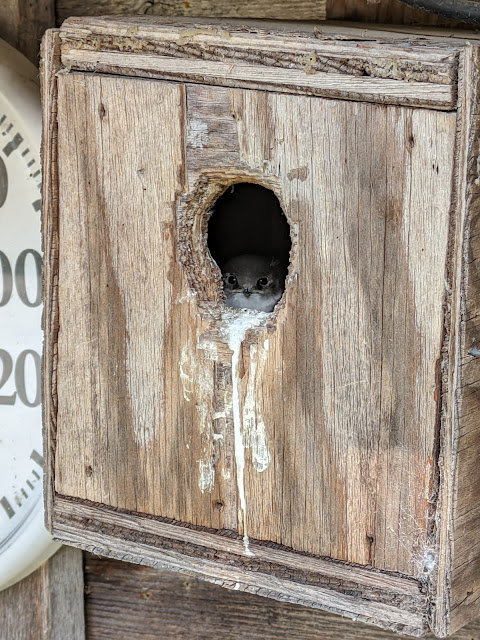
  This shot is from Hope, Alaska.  While we were waiting for our food, I could hear the little chirps. The point of the week, of course, is to bring awareness to the disappearance of natural sites.  It encourages paying attention to local nesting birds and to put up boxes to support the conservation of breeding birds. Going with nests, and since I'm off tomorrow, I'll leave you with the eaglets.

Save the Eagles Day

Image
  Jackie and Shadow of Big Bear Valley. They were spotted mating earlier this month and they've been prepping the nest. The female stores the sperm until she is fertile and ready to lay eggs. Jackie is about 11 years old and Shadow is 9.  They have been together since 2018. They engage in bonding behavior as they reconnect, with love nips and chortles. For now, they just seem to be enjoying each other's company. The Friends of Big Bear Valley focus on "educating not only our members and the public about our valley's special environment, but also on educating the governmental agencies whose job it is to enforce the local, state, and federal environmental laws. We save the eagles by knowing them and protecting them, cheering for their eggs to hatch and their eaglets to survive. Site

Johnny Appleseed

Image
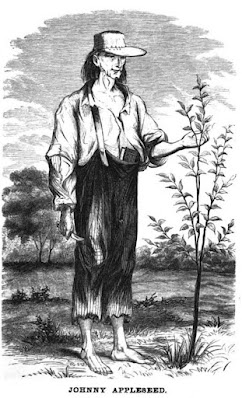
  Real name, John Chapman.  Born on this day in 1774. He became an American legend while he was still alive, as a nurseryman and conservationist. Johnny started an apprenticeship as an orchardist, inspiring his love of apples.  By 1800, he had his own orchard in Licking River, Ohio.  Once he decided to spread out, he started planting nurseries instead of orchards.  He would build fences around them and leave them in the care of neighbors, returning every year or two to tend the trees. In 1817, the Church of New Jerusalem spoke of a missionary who traveled around sowing apple seeds. He introduced apple trees to large parts of Pennsylvania, Ohio, Indiana, Illinois, and Ontario - as well as some northern counties of West Virginia. A last remnant in Savannah, Ohio. We were recently gifted some homemade apple sauce from a friend's tree. Yum.

Animal Life - Lion Day

Image
  Katanga Lion (Southwest African) Congo lion (Northeast) Transvaal lion (Southeastern) Nubian lion (East African) Barbary lion Asiatic lion West African lion Of those, the West African is the smallest.  They also tend to have weak manes, or none at all. They are all considered vulnerable, but others are "critically endangered" in some parts of Africa. There are conservation efforts in play, such as the Okavango Wilderness Project and the Moholoholo Rehabilitation Center. More specifically to lions, I found the Ewaso Lion Project in Kenya. Link

World Turtle Day

Image
  All tortoises are turtles, but not all turtles are tortoises. Tortoises are exclusively land creatures, like our friend in the desert here. The American Tortoise Rescue began in 1990 to protect these animals from environmental hazards, including the hunting and harvesting of their eggs.  Their mission is to fight the exploitation of turtles for food and the illegal sale of live animals on the internet. The desert tortoise lives in the Mojave Desert of California, Nevada, Arizona and Utah.  It is currently listed as threatened under the Endangered Species Act. Ravens are a major predator of tortoise babies, but once they reach adulthood, they are rarely killed.  Not only can they tuck inside their shell for protection, but they're also diggers who burrow.  This is also how they temperature control during the cold nights and hot days. The Nature Conservancy has created Habitat Protection Plans, which includes the Red Cliffs Desert Reserve.  The animals rely...

Science is Fun Fridays!

Image
  Madagascar has been isolated from Africa and Asia for more than 80 million years - more than 90% of its species are endemic to the island.  But the wildlife is threatened, and the Malagasy people live below the poverty line.  It is currently being examined for conservation status and actions required to protect biodiversity, so I figured we'd get look at some inhabitants. Giraffe weevil Harlequin Mantella Malagasy civet Madagascar Owl Euphorbia iharanae Nepenthes madagascariensis We've seen relatives of these before: Baobabs The Malagasy people have long been distinguished between Highlander and Coastal groups, but there are multiple tribes within the subgroups. The Highlander populations are more Austronesian/Malay-Indonesian ancestry while the Coastal dwellers are more ethnically Bantu. The largest group is the Merina, there in the central plateau. It was their king Radama who fought against French colonization, but the monarchy was ultimately abolished in 1897. Scien...

Animal Life - World Giraffe Day

Image
  Celebrating the tallest animal on the longest day (or night, depending on your hemisphere). This day is not only about loving these animals, but conserving them as well.  The IUCN Red List indicates their numbers are dropping, even when they included subspecies.   Additional research has concluded there are four distinct species of giraffe: Masai, Northern, Reticulated, and Southern. From these, there are subspecies such as the Angolan giraffe, the Luangwa giraffe, and the Nubian giraffe. As a whole, giraffes are considered "Vulnerable." The Kordofan giraffe is critically endangered, and 60% of their population live on a conservation in Chad.  Compared to the others, Kordofans are relatively short, and they have more irregular spots on the inner legs. The Giraffe Conservation Foundation is involved in initiatives in 17 African countries, impacting over 100 million acres of giraffe habitat. This year, the day is dedicated to bringing giraffe back to Mozambique....

World Oceans Day

Image
  70% of our world is ocean, with over 200,000 identified species calling it home.  It produces nearly 50% of the planet's oxygen, and it is key to our economy. The goals of today are to protect 30% of our lands, waters and oceans by 2030. 30x30 Currently, less than 8% of the ocean is protected, with overfishing and coral reef destruction a huge part of the problem, not to mention the microplastics. So the theme this year is Revitalization: Collective Action for the Ocean "We have a once in a generation opportunity - and responsibility - to correct our relationship with the natural world, including the world's seas and oceans." Antonio Guterres, UN Secretary General Winner, 2021 World Oceans Day, Renee Capozzola Me, running into the Pacific. Appreciate the ocean, and take care of the ocean. Enjoy! Site