Posts

Showing posts with the label Geology

Science is Fun Fridays!

Image
  The Singhbhum Craton in India is one of Earth's oldest surviving blocks of continental crust. Researchers came across a carbonaceous layer sandwiched in ancient chert - the mineral form of silicon dioxide - and there they found fossilized remnants of microbial mats. Some of these traces of life have been dated to 3.5 billion years ago. The silica entombed the dead microbes, preserving them as thin layers of carbon that can survive even as the surrounding rock is transformed by heat and pressure. First they had to establish that the carbon was indigenous to the rock, and not introduced by some later geological event, and then they had to prove a biological origin. They used Raman spectroscopy to determine its structure, which in turn reveals formation and alteration history.

Science is Fun Fridays!

Image
  Diana's Punchbowl is a vase-shaped depression located along a small fault in the Nevada desert. It is also called the Devil's Cauldron. There is a geothermal pool about 30 feet down, and it runs around 180-200 degrees. Over thousands of years, mineral-rich groundwater rose out of the fault line, creating a travertine hill with this crater in the center. Nye County is one of the most seismically active regions in the state, situated in a geologically deforming zone known as Walker Lane.  It accommodates 25% of the shear motion between the Pacific and North American tectonic plates.  

Science is Fun Fridays!

Image
  South of town is a historic resort, with natural hot springs that were nationally acclaimed by President Ulysses S. Grant when he visited in 1879. Steamboat Hot Springs. The area is a small volcanic field of rhyolitic lava domes including steam vents and fumaroles. The name is attributed to Mark Twain, who is quoted as saying, "Behold! A Steamboat in the desert!" The waters are a combination of sulfate minerals not found anywhere else in the US. "Geologically, the springs are among the most interesting in the world, for they demonstrate in a striking way how mineral veins and deposits are formed," noted state engineer, Alfred Merritt Smith, in 1935. We stopped in for a quick soak this week, and it felt amazing.  The added aromatherapy certainly helped - a signature blend of lavender, orange, and cedarwood.  So relaxing, calming, and nourishing. The Water There's a nearby geothermal plant as well, producing over 24 Megawatts of electricity, enough to supply 24,...

Science is Fun Fridays!

Image
 Spotted Lake, also known as Khiluk Lake or Osoyoos - located in Okanagan Valley, BC, Canada. It is a soda lake, and every summer as the water evaporates, there remains this mineral-rich crust with circular brine pools. Minerals include sodium sulfates, calcium, magnesium sulfate, as well as trace amounts of silver and titanium. The local tribes have long considered it sacred for its healing properties.  According to their legends, each pool has a different ability. In 1916, minerals were extracted to make ammunition for World War I. It is one of the world's most mineral-dense lakes, and the way they have accumulated over time is a rare phenomenon.  Scientists are still studying the natural processes that led to this formation, how the mineral concentration and evaporation interact in this environment.

Science is Fun Fridays!

Image
This is Eternal Flame Falls in Orchard Park, NY. As the name suggests, a small fire behind the falls burns uninterrupted.   It burns about 8 inches high, on a bed of shale rocks rich in organic matter.  As the matter breaks down, it produces highly flammable gases - such as hydrogen sulfide and methane - which seep through the cracks. The grotto space protects the flame and holds the gas in this particular seep. The gas comes from a geological formation called the Hanover Shale, which dates back to the Devonian Period.

Science is Fun Fridays!

Image
This is Hot Creek, flowing from the Upper Owens. It was a little warm here, but farther down is the Geological Site. Groundwater heated by subsurface bodies of molten rock reaches the surface and combines with the cooler creek water. This pool looked very warm. Little Hot Creek was not just a little hot. As we headed back home we stopped at Travertine Hot Springs. "Travertine" is a form of limestone deposited around mineral springs. 60 tons had been mined from this site and used to build the interior facings of San Francisco City Hall.  

Science is Fun Fridays!

Image
  Mirabilite mounds are making an appearance on the Great Salt Lake. These crystalline formations have only be found in four places in the world, because of the extremely specific conditions required.   The south arm of the lakebed has underground springs rich in sodium sulfate.  When the water rises and collides with the cold winter air in such a dry environment, it stabilizes as mirabilite, creating crystal terraces. Mirabilite is also known as Glauber's salt.  As a mineral, it is found in several areas within the Mammoth Cave System in Kentucky, and has been used in Traditional Chinese medicine. 

Science is Fun Fridays!

Image
 Biscuit Basin Boardwalk in Yellowstone National Park following a hydrothermal explosion. On July 23rd, it's been determined that water suddenly transitioned to steam in the shallow hydrothermal system beneath Black Diamond Pool.  Debris was then shot hundreds of feet above the ground, with grapefruit sized rocks being thrown tens to hundreds of feet from the source. This was not caused by any volcanic activity.  Seismicity and emissions remain at their normal background level. But here, you can see the surprise. This did alter the shape of the pool, and in the after image you can see some murky overflow. The basin will be closed for the remainder of the season for maintenance and monitoring.

Science is Fun Fridays!

Image
  Over 400 million years ago, boiling rocks from the Earth's crust tore an ocean into Mongolia. Known as a mantle plume, this stream of hot, buoyant rock is typically the first stage of the Wilson cycle - the process by which supercontinents break apart and come together. The volcanic rocks that were found in Mongolia are from the Devonian period, when Pangaea consisted of Laurasia and Gondwana.  The plume actually hit a weak spot, where crust had previously come together through accretion. The researchers say the Mongol-Okhotsk Ocean was probably similar to what is seen today at the Red Sea, where the crust is spreading about 1 centimeter per year.  In tens of millions of years, the rift could create a brand new ocean in eastern Africa.

Science is Fun Fridays!

Image
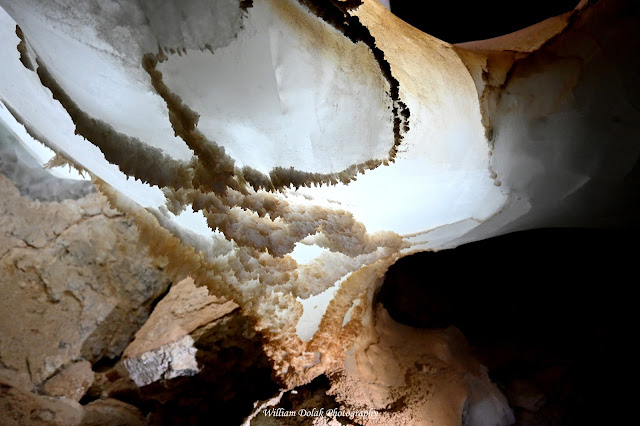
  A cave in Nevada contains massive gypsum glaciers, epsomite and gypsum chandeliers, and crystals the size of cars.  Researchers also discovered a newly identified formation called scabbards - formed in water, these calcium castings are similar to shells but once contained selenite gypsum crystals. These are not known to exist anywhere else in the world. The cave also preserved ancient artifacts from Native Americans, including a torch in the rock and some bits of pottery.  This one still has rope around it to carry. More pictures:

My Shots - Tufa Rocks

Image
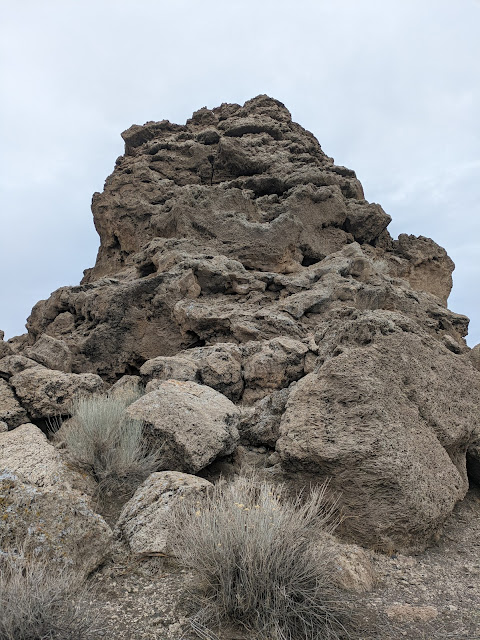
  Pyramid Lake is the site of some of the Earth's most spectacular tufa deposits. A rock composed of calcium carbonate that forms at the mouth of a spring, or lake water. There are varieties in the rock, such as this thinolitic, or crystalline. This one shows the lithoid, or dense. And to the right, what I've always called brain rock - the dendritic, or branching. The Pinnacles.

Science is Fun Fridays!

Image
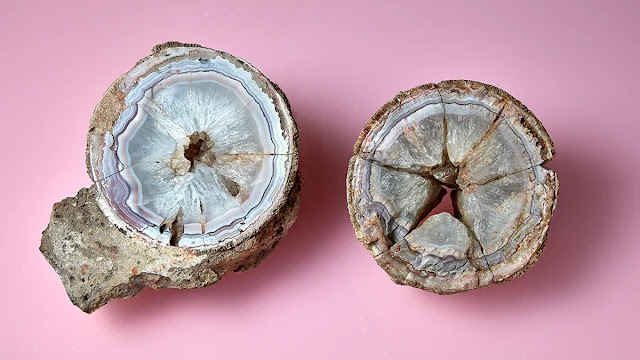
  Agate is a rock formation, often within volcanic and metamorphic rocks.  Consisting of chalcedony and quartz, they can come in a wide variety of colors. The above was registered to the Natural History Museum's Mineralogy Collection 175 years ago.  The particular pink and white interior caught the eye of Robin Hansen, a mineral curator.  The specimen was taken to a mineral show in France, where Hansen saw an agatised dinosaur egg that had many similarities... The piece was picked up in India, and has features that are the same as Titanosaur eggs, the most common dinosaurs in the area 60 million years ago. Hansen and the dinosaur experts now involved believe volcanic activity led to the egg being encased in volcanic rock.  The internal structures would have internally decomposed, and the silica-rich water would have made its way into the egg cavity, creating the banded agate specimen. Or, "eggate." IFL Science

Science is Fun Fridays!

Image
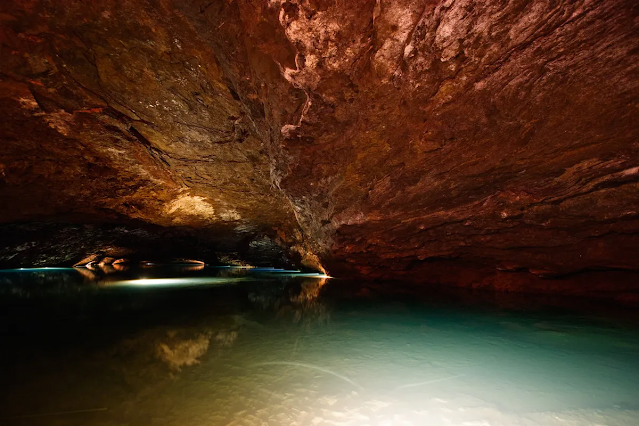
  Craighead Caverns in Tennessee are home to America's "Lost Sea."  It is the largest non-subglacial underground lake in the US, and the second largest in the world.  But no one's really sure just how big it is...  Divers have tried to find the end, but all attempts have failed. Archaeologically, the cave holds evidence of giant Pleistocene jaguars.  Later, it was used by the Cherokee as a shelter where they left behind pottery, arrowheads, weapons, and jewelry. More recently, it was mined by Confederate soldiers for saltpeter to make gunpowder and moonshiners would hide their supplies within during the Prohibition era. Geologically, it is home to an array of crystals, stalagmites and stalactites along the limestone walls. The lake itself was discovered in 1905 by a young boy playing in the cave.  He was small enough to crawl through the tunnel that dropped him in knee-deep water.  That entrance has since been blasted for larger entry. Beneath the surf...

Science is Fun Fridays!

Image
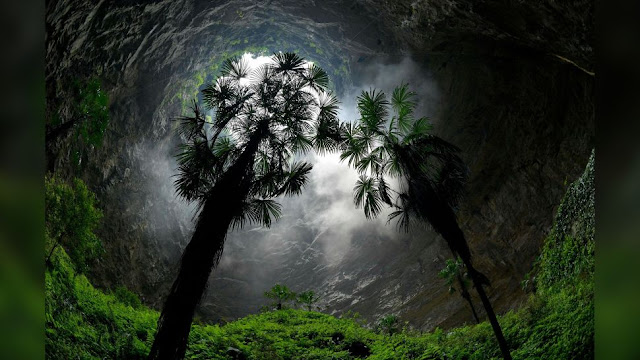
  A team of scientists discovered a sinkhole with a forest deep inside. Located in Luoquanyan Village in China, it is 630 feet to the bottom with ancient trees growing around 130 feet. It is no surprise for the area, which is home to karst topography - a landscape of dissolving bedrock which causes sinkholes and caves.  Rainwater collects carbon dioxide as it runs through the soil, becoming more acidic, then trickles through cracks leading to tunnels and voids. The larger area, Guangxi Zhuang Autonomous Region, is a UNESCO World Heritage Site for its karst formations, which also includes rock pillars and natural bridges. Researchers say species unknown to science could be hiding in this gaping hole.

Science is Fun Fridays!

Image
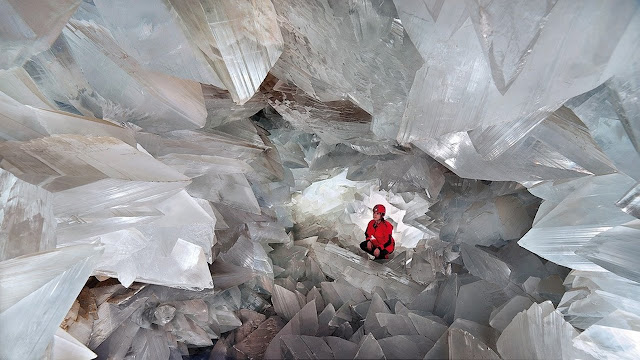
  The Pulpi geode is the 2nd largest in the world, but the largest that can be visited. Located in Almeria, Spain, it was found in 1999 by the Madrid Mineralogist Group. It is considered a worldwide phenomenon not just for it's size, but the transparency and perfection of the plaster crystals.  It is estimated that the crystals are in an age range from 2 million to 60,000 years old. The formation is a mixed karski-hydrothermal process by which, first the dissolution of dolomite was produced, and then the gypsum crystals formed with the injection of hydrothermal waters from the volcanic activity of Cabo de Gato. The Naica crystals in Mexico are the largest in the world.  It was discovered by miners in 2000. The cave is located on a fault above an underground magma chamber.  The magma heated groundwater that was saturated with sulfide ions.  Oxygen slowly diffused into the hot water and oxidized the sulfides to sulfates, which precipitated as anhydrite.  When...

Science is Fun Fridays!

Image
  A theoretical mineral, which can be created in a lab, has finally been discovered deep inside a diamond. The sample comes from 410 miles below our feet, created in the high pressure of the lower mantle. It is a calcium silicate perovskite that has been named davemaoite. "The discovery is the result of decades of efforts, and the development and use of microanalytical techniques for identifying structures and compositions of micron-scale inclusions in diamonds." Lead Author Dr. Oliver Tschauner from UNLV. Calcium silicate perovskite is expected to be the fourth most abundant mineral on Earth. The team found, through structural and chemical analysis, that the mineral is able to host a wide variety of elements, specifically large amounts of trapped potassium. It has been shown experimentally that this mineral can act as a sort of garbage can for radioactive uranium and thorium.  Along with potassium, these are major heat-producing elements. Davemaoite is only the second high-p...

Science is Fun Fridays!

Image
This is the Dun Briste Sea Stack in Mayo, Ireland. It used to be part of a cliff wall but weather and waves weakened the land over time, and erosion won out. The surrounding cliffs are around 350 million years old, when sea temperatures were higher and the coastline a greater distance away. Maria McNamara, a paleobiologist at the University of Cork, suggests we're looking at "tens to hundreds of thousands of years" of geological processes in the rock. She notes an area of onlapping strata, or layers, which suggests a rise in sea level long ago. "As the land surface was flooded, sediments were laid down progressively inland." Deeper water led to more fine-grained shales being deposited, while shallower waters see more sandy limestone.  The upper portions are thicker limestone beds, indicating that the sea level shallowed as the the higher rocks were forming. It is believed that an arch used to connect the stack to Downpatrick Head, and this collapsed in 1393 foll...

Science is Fun Fridays!

Image
 Bismuth, element 83. It is considered a post-transition metal as it shares some characteristics with transition metals such as copper, lead, iron, zinc and gold, but it has a particularly low melting point.  It also has low thermal conductivity as well as electrical conductivity.  But it has the greatest electrical resistance when placed in a magnetic field, and this is called the  Hall Effect Bismuth decays into thallium, but has an extremely long half-life - about 20 billion years! In 1753, French chemist Claude Geoffroy the Younger was able to prove bismuth was distinct from lead.  It was named "weissmuth" after the element's white oxide. The largest source of bismuth is found in the mineral bismuthinite but is typically obtained as a by-product in refining lead, copper, tin, silver and gold ores found in Bolivia, Peru, Japan, Mexico, and Canada. It has a silver color when first produced, and oxidizes upon contact with the air, which creates the shimmery col...

Science is Fun Fridays!

Image
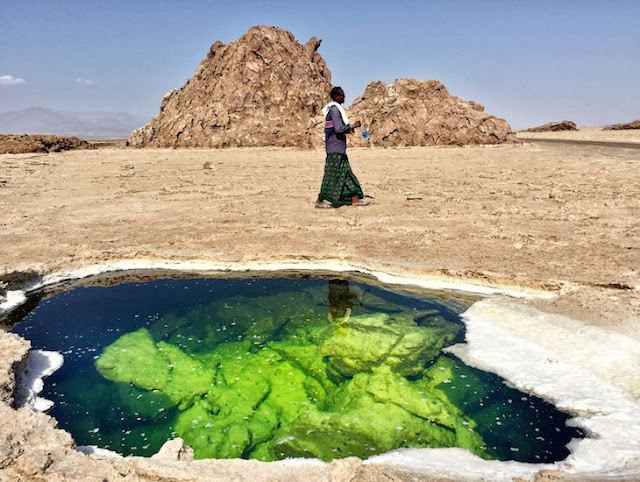
  The Danakil Depression in Ethiopia - here, Lake Karum peeks out through a hole in the salt flats. It lies at the junction of three tectonic plates, developed as a result of Africa and Asia moving apart.  This area is about 410 feet below sea level, and is one of the hottest places on Earth.  The average temperature is 94 degrees F.  Volcanic activity helps heat the various spring waters up to 212 degrees. A cone formed around a small geyser. They discharge brine and acidic liquid, producing cones of salt. Erta Ale is an active basaltic shield volcano, and the most active in Ethiopia. It also holds the longest existing lava lake, present since around 1906. Dallol, a cinder cone volcano, was formed by the intrusion of basaltic magma into the Miocene salt deposits and the subsequent hydrothermal activity. The Afar people still mine for salt here, as their grandfather's grandfather's did. Salt is considered "white gold" and was a form of currency until the 20th century...

Science is Fun Fridays!

Image
Wikipedia Today's post started with a look at the Moeraki Boulders, but expanded into other concretions  as well. A concretion is compact matter that forms within layers of sedimentary rock, as mineral cement drips within the spaces between particles.  The sediment cements around a nucleus, which can be a leaf, a piece of shell, or a fossil.  Credit: Hidekazu Yoshida The Moeraki Boulders are mudstone concretions that have been exposed on Keokohe Beach in New Zealand, and are protected in a science reserve. Sandstone concretions can be found on Bowling Ball Beach in Mendocino County. Wikipedia Hematite concretions have even been found on Mars! Wikipedia