Posts

Showing posts with the label Animals

Science is Fun Fridays!

Image
A man bought what he thought was a poorly taxidermied fox head.  It was only 50 quid, and he thought it was funny.  When he later sold it at auction for 1,000 times what he paid, he realized he may have had something else entirely. In fact, it's a thylacine.  An extinct carnivorous marsupial, commonly known as the Tasmanian tiger. As European settlers arrived, they were considered a pest to livestock, and the government offered bounties on them.  The last known individual died in a zoo in September 1936.  Scans confirm the skull is intact, and the forehead overstuffed.

Science is Fun Fridays!

Image
 This is the cotton bollworm - an agricultural pest, but a potential hero in biodegradation. Polyesterene is a huge problem in our landfills, and scientists have found plenty of insects capable of eating the plastic, but it was unclear how they were breaking it down. Biochemists have discovered four types of fungi in the guts of cotton bollworm larvae which appear to play the part. After testing each with a film of Styrofoam over 60 days, they were especially surprised by Taloromyces, which was able to grow on the film, meaning it used it as a carbon/food source. Researchers will be seeking to learn the chemical processes involved, including which enzymes, to determine if the fungi is actually digesting the plastic or just breaking it down into smaller pieces, and what the byproducts of those reactions might be.

Science is Fun Fridays!

Image
 Researchers at the Rocky Mountain Biological Laboratory have been studying yellow-bellied marmots since 1962. It is the second oldest continuous study of individually marked mammals in the world. "Long-term research like ours is both very valuable to understand how and why things change over time," says professor Daniel Blumstein. This type of study requires funding though, and that has recently been cut across the board. So the team turned to Only Fans  Marms. It is a subscription platform where users pay creators for content, such as exclusive photos and videos. They've had some engagement over the last month, not a lot of money, but they're also just hoping to raise public awareness. "I think this can be an amazing way to teach people more about animal social behavior, which can sometimes be hard to observe," says team member, Emily Renkey.

Science is Fun Fridays!

Image
 Vellela Vellela. Or, "By-the-Wind Sailors," are a free floating hydrozoan animal which live on the surface of the water.  They feed on planktonic crustaceans such as copepods. This one's upside down, and still has some tentacles attached.  They are related to jellyfish, as well as sea anemones. In this shot you can see a bit more of the sail shape - and an idea of the amount that was on the beach.  I thought it was plastic litter at first. Anyway, Bowie helped cleanup.  ^_^ NPS

Science is Fun Fridays!

Image
 Dr. Steve Boyes has spent the last 10 plus years searching for a species of elephant he believed still exists in the Angolan highlands. Before Civil War in 1975, there were around 70,000 elephants in this area - they were killed for ivory, and they were killed by land mines.  Many fled. There was noted evidence of a small population, such as footprints and dung.   "You can sense them, but you can't hear them.  They're ghosts." Boyes worked with local KhoiSan Master Trackers, and called that experience, "the birthplace of science." "There is no scientific mind that I know that can, in the moment, consume so much data and bring out a conclusion in almost real time." Master Trackers are indigenous experts with over 100,000 years of ancestral knowledge, capable of interpreting and trailing wildlife in the Kalahari and surrounding areas.  While these skills were once used for hunting, they are now focused on conservation efforts as well as ecotourism.

Science is Fun Fridays!

Image
 A new modeling study has traced the act of kissing back 21 million years, from a shared ancestor of humans and other large apes. Researchers concluded that Neanderthals likely kissed, and may even have kissed modern humans. Since there are other animal behaviors that include mouth-to-mouth engagement, the scientists defined kissing as "non-aggressive mouth-to-mouth contact that did not involve food transfer." Bonobos, orangutans, gorillas, chimpanzees, macaques and baboons have all been observed in a kiss. Scientists used Bayesian statistical methods to reconstruct the evolutionary history of kissing.  Treated as a biological trait, they tested many possible ways this behavior could have evolved.  They propose that kissing may have come from the act of sharing food, a bonding activity in itself.

Pushkar Camel Fair

Image
  The Pushkar Camel Fair takes place annually this time of year in Rajasthan. There are camel races as well as beauty contests, with traditional Rajasthani music and dance performances. There is reference to a Kalbelia folk dance, which is snake charming.  The Ghoomar dance is performed by women, and means "to twirl."  Also performed by women, the Chari dance. The event initially served as a gathering place for local communities to trade livestock and celebrate their heritage.  Food stalls sell local specialties such as dal baati churma and malpua. The fair coincides with the Hindu month of Kartik, when believers go to Pushkar Lake for a holy dip. Camels are part of the cultural identity of the desert, not to mention economically important to the people who live there.  To protect declining populations, Rajasthan declared the camel the official state animal back in 2014.  But apparently legislation in 2015, meant to prohibit slaughter and export, has made i...

Science is Fun Fridays!

Image
  The first ever encounter with a live Sulawesi coelacanth has been reported by divers off the coast of Indonesia, photographed for the first time in the wild. They were thought to have gone extinct millions of years ago, but then in 1997 one showed up in a fish market.  It was quickly given protected status to avoid intentional fishing. One was caught in 1998 and was given to an ichthyologist, who was able to document its coloration, fin movements, and general behavior.  It didn't survive the catch, and was donated to the Indonesian Institute of Sciences. It is locally called raja laut, or King of the Sea. Coelacanths are an ancient species of lobe-finned fish, and there are only two living species.

Science is Fun Fridays!

Image
We started talking about snakes yesterday so this felt right. This seemingly friendly face belongs to one of the most venomous snakes in the world - the black mamba. A team has produced a single antivenom that provided mice with full protection against 13 species, and partial protection against six other species. They are confident they are within reach of an antivenom that covers all snakes that use neurotoxic venom, which includes cobras, taipans, black mambas, and some sea snakes. This is partly in thanks to Tim Friede, a snake handler and collector.  He started with injections of venom, small dilutions, before taking it straight from the snake's mouth.  He developed hyperimmunity and had more specific antibodies directed towards snake venom than most/any human. Centivax reached out to him so that they could study these antibodies.  They identified certain common features from the different snake toxins and antibodies, such as LNX-D09 which blocks the activity of many ...

Aquatic Animal Day

Image
 My shot from the Seymour Marine Discovery Center in Santa Cruz. I've always been intrigued by sea anemone but never quite sure of what's going on, so that's our direction today. While they largely stay in one place, they are predatory.  Their tentacles contain nematocysts, or stinging cells, that paralyze prey.  The venom is harmless to humans though. And you may know that clownfish are able to withstand these stings so they like to hang out for protection and they clean the anemones of parasites. My shot from Mattole, Pacific Coast. The giant green anemone is intertidal, seen here in a tide pool. They feed on crabs, mussels, small fishes, and sea urchins.  We did see it try to grab something it thought might be food.  And we saw what it would've liked on the shore nearby.

Science is Fun Fridays!

Image
  This is Felis domesticus  Chester Willard, and he is a published researcher - along with physicist Jack H. Hetherington. In 1975, Hetherington was documenting results in the field of low-temperature physics. Upon review of his paper, it was noted that he had used "we" throughout even though he was the sole author.  So he added his cat as F.D.C. Willard. With his article now in Physical Review Letters , his office received requests to speak with Willard.  Once the truth was revealed, the physics community embraced it. Willard continued to appear in footnotes, where he was thanked for "useful contributions to the discussion." Hetherington is Professor Emeritus in the Department of Physics and Astronomy at Michigan State University.  In 2016, he became interested in the artistic possibilities of representing mathematical functions and graphs.

Justice for Animals Week

Image
 This week highlights the importance of standing up for animals and ensuring they receive the care and protection they deserve. The ALDF files high-impact lawsuits to protect animals from harm, provides free legal assistance and training to prosecutors in their fight against animal cruelty, supports animal protection legislation, and provides resources and opportunities to law students and professionals to advance the field of animal law. From animals used in research to captive animals and farm animals, wildlife and companions. The Crows are this year's representatives. Support I found this topic timely as just last week, a man who was convicted of animal cruelty in 2015, was denied parole.  He was sentenced to 28 years, the maximum under Nevada law.  His acts were torturous, brutal - someone who is a danger not only to animals at this point.  But he will, eventually, be released. Nevada ranks in the middle for animal protection laws.  The five best are: Oregon...

Science is Fun Fridays!

Image
 In the last 20 years, the Saiga antelope population in Kazakhstan has recovered from 40,000 to 2.8 million. That's why the Altyn Dala Conservation Initiative was awarded the 2024 Earthshot Prize for ecosystem restoration. The efforts restored 75 million hectares of grassland, wetland, and desert.  Saiga are considered a keystone species, pivotal in maintaining a healthy ecosystem, and one that's relied on by steppe eagles, sociable lapwings, kulan, and the Przewalski's horse (the world's last living wild horse species). They went extinct in the wild during the 60's, but conservation efforts have also helped recover their populations on the plains of Central Asia. The Earthshot Prize provides funding and expert support, as well as partnership and coaching opportunities through Global Alliance Partners. RSPB

Science is Fun Fridays!

Image
  This is Devil's Hole in Death Valley National Park. These waters are home to an endangered pupfish, and yesterday's earthquake caused a disturbance. The National Park Service reports that a shelf was broken by waves that reached 24 inches high.  NPS biologist, Kevin Wilson, says a lot of pupfish food "just sank deeper into the cave, most likely too deep for the fish to get."  There were likely pupfish eggs that were destroyed as well. But it's not all bad news.  "It cleaned off any decaying organic matter that could otherwise cause pockets of low oxygen," so this type of reset can be good for the fish. Isolation over the course of thousands of years has led to these fish being, what is believed to be, one of the most inbred invertebrates on Earth.

Science is Fun Fridays!

Image
 A research program led by the Australian National University has been studying blue whales in the waters off the coast of Timor-Leste in Southeast Asia. This part of the sea is known as a "crustacean hotspot" that many whales regularly pass through.  Deep ocean channels serve as a major migratory highway between the Pacific and Indian Oceans. The nearshore waters, particularly in the Ombai-Wetar Straight, provide one of the most accessible locations for blue whale research. For the first time, we have footage of a mother nursing her calf. These waters "really are providing blue whale scientists with some of our first glimpses into the private lives of one of the world's largest but most elusive animals," says Associate Professor Karen Edyvane.  (She is also Adjunct Senior Research Fellow at Charles Darwin University). This information suggests that the region is not only important for foraging, but is also critical for reproduction and early life. Although stil...

Science is Fun Fridays!

Image
  When we think about corals, we typically think of tropical waters, but they are actually incredibly diverse and researchers believe they just found a new species in the icy cold waters of the Arctic Ocean. The team from the Nippon Foundation-Nekton Ocean Census were documenting the depths of the ocean.  On a ROV dive, they came across a field of crinoids, or sea lilies, and there they found the corals living on the stalks. "It really demonstrates coevolution in the deep sea," said Professor Alex Rogers, Principal Investigator at Ocean Census.

Science is Fun Fridays!

Image
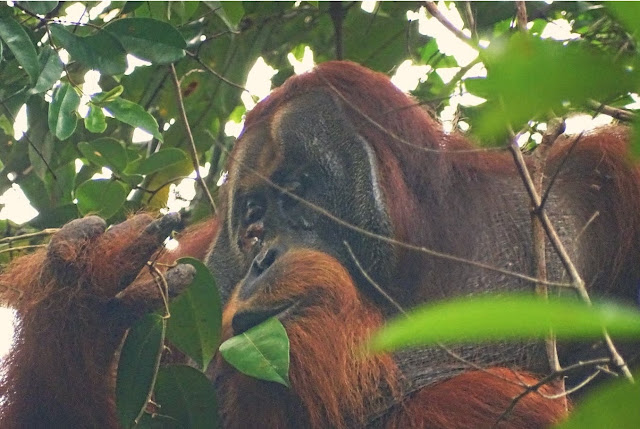
  Rakus is a wild Sumatran orangutan who was found with a wound to his cheek, likely the result of a fight for dominance. He was seen chewing the leaves of the Akar Kuning plant, and applying them deliberately to his wound.  Within three weeks, he was completely healed. Sumatrans know the plant for preventing infection, as well as in treatment for malaria, dysentery, and diabetes.  Orangutans appear to be avid users of medicinal plants, but this is the first time such specific application has been witnessed. There have been reports of Bornean orangutans chewing Dracaena cantleyi leaves and rubbing the lather on their arms and legs.  According to Indigenous peoples in the area, it is used to treat sore muscles and bone pain.

Science is Fun Fridays!

Image
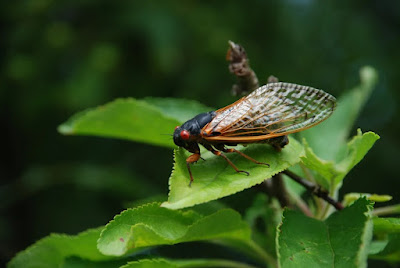
  This year, for the first time since 1803, a double brood emergence will take place. Brood XIX, with a 13 year life cycle; and Brood XIII, with a 17 year cycle. 18 states will be affected, from Michigan and Wisconsin down to Alabama and Georgia, but not necessarily a lot of overlap. But we're talking TRILLIONS of cicadas.  They are expected sometime in May to late June, and will be around for about a month or so before they die. It's not just about the numbers though, it's the noise.  With this many, altogether, it could be deafening. There's also a sidenote about wearing a raincoat....apparently they "pee in jet streams like elephants." I'm so glad to be a Nevadan.  :-)

Science is Fun Fridays!

Image
  Chimaeras are a group of fish also known as ghost sharks.  The species is related to sharks but are thought to have diverged around 400 million years ago. In October 2018, a deep-sea survey collected the above specimen in the Andaman Sea off the coast of Thailand.  It was recorded as Chimaera aff. macrospina  but further research has concluded this is a new species. Members of the Chimaeridae are told apart by differences in their snouts and the position of their anal fins.  This one has a short snout and large oval eyes, which are iridescent green.  It has been named Chimaera supapae, in honor of Professor Supap Monkolprasit, who devoted her life to the study of cartilaginous fishes in Thailand.

Science is Fun Fridays!

Image
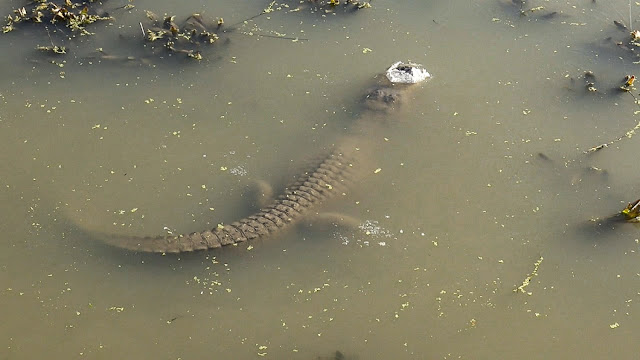
  "Gatorcicles" have been seen in Texas and North Carolina. According to experts, this behavior is called brumation, and is rarely witnessed. Alligators rely on their environment for temperature regulation.  In brumation, their metabolic rates slow down and they become lethargic.  With their snouts through the ice, they're able to continue breathing.  They can remain in this state for 4-5 months. Eddie Hanhart, from Gator Country Adventure Park, says the gators know when it's going to freeze.  So they find a comfy spot and wait. This photo was shared by Swamp Park, but they also have some non-frozen gators.