Posts

Showing posts with the label Neuro

Science is Fun Fridays!

Image
  I read an article about a movie that recently came out, a fictionalized account of understanding plant consciousness. "Researchers tend to define consciousness loosely as the ability to experience - the subjective, ineffable feeling of being alive." From the neural network mycelium provides, to the physical responses plants can have to the world around them, there is definitely a sense of being alive. I was once ridiculed by a behavioral psychologist for suggesting an animal's thought process, because to him there was no such thing.  But even if it's different than how we think, I do believe it is evident in other life forms.

Science is Fun Fridays!

Image
  Boston University is a major hub for this rapidly growing field in biomedical engineering. Faculty there build molecular and photonic tools to study the brain; investigate the quantitative neurophysiology underlying brain and nervous system function; develop computational models that guide our understanding of brain function; work to understand and treat neurological disorders; and advance methods by which we can help repair the brain and restore neurological function. The Neurophotonics Center is driven by advances in optical methods, allowing for visualization of intracellular organelles and protein assemblies as well as noninvasive macroscopic investigation of cortical activity. Director David Boas, PhD, runs the Bio Optical and Acoustic Spectroscopy Lab. "Our technologies are used for measuring brain function and physiology on microscopic to macroscopic length scales and are applied in species ranging from mice to humans." The most prominent new technology is wearable f...

Science is Fun Fridays!

Image
  Extracting memories is something we've seen in movies before, but neuroscientists are split on whether this can actually be done. A survey evaluated beliefs on how memories are stored and on the structural basis of long-term memories. Over 45% of respondents agreed that it would be possible to extract a memory from a static synaptic connectivity map.  (This is the physical wiring of the brain).  When asked what additional information may be needed for memory readout, the most common response was "measurements of dynamically changing neuronal activity." 70.5% of participants agreed that long-term memories are maintained by synaptic strengths and neuronal connectivity patterns.

Science is Fun Fridays!

Image
  1st Place for the 2024 BCI Award has gone to an international team who have encoded complex touch sensations into a bionic hand. "We conveyed tactile sensations related to orientation, curvature, motion, and 3D shapes for a participant using a brain-controlled bionic limb," explains lead author, Professor Giacomo Valle. In patients with paralysis caused by spinal cord injury, the electrical signals that would normally carry tactile information from the hand to the brain are blocked.  With the brain-computer interface, patients are able to experience the feel of objects.   We tend to focus more on our senses of sight and hearing, but touch also provides abundant data about the world around us.  Not to mention the importance of human touch - another study has developed temperature sensing prosthetic limbs. But in this case, the limb is extracorporeal, attached to a wheelchair.

Science is Fun Fridays!

Image
  An international research consortium has released the first complete wiring diagram of an entire fruit fly brain. Maps that show every neuron in a brain and the myriad connections between them are called connectomes.  Fruit flies have 139,255 neurons in their brain, with over 50 million synapses. That isn't a lot compared to a human brain, which has about 86 million neurons, but fruit flies do complicated things such as walk, fly, navigate, even sing. "If we want to understand how the brain works, we need a mechanistic understanding of how all the neurons fit together and let you think.  For most brains, we have no idea how these networks function," explains Dr. Gregory Jefferis. The FlyWire Consortium brought together expertise from dozens of labs around the world to achieve this.  Dr. Jefferis and other colleagues annotated the different types of neurons found - 4,500 of which were new to science. The CT1 neuron spans across an entire eye and contains 140,000 syn...

Science is Fun Fridays!

Image
  Is My Blue Your Blue? Color is subjective in both personal and cultural terms. In Japanese, Thai, Korean, and Lakota languages, the word for blue is also used to describe what English-speaking people might refer to as green.  In Welsh, the word for blue came from the word for green. Turquoise is considered a cyan color, which is between green and blue on the visible spectrum of light. From the test, the researcher reports that many responses cluster around hue 175, and the nominal boundary between blue and green is 180. Neuroscience and AI Patrick Mineault, PhD

Hump Day History in Science

Image
 Since I'll be off Thursday and Friday, I wanted to cover our bases for both history and science. This is Richard Darwin Keynes, born on this day in 1919, he passed away in 2010. In 1979 he released The Beagle Record: Selections From the Original Pictorial Records and Written Accounts of the Voyage of the H.M.S. Beagle.   You see, Charles was his great-grandfather. But Richard made his own contributions to science, studying the mechanisms underlying the conduction of the action potential along nerve fibers. By using the giant nerve fibers of squid, he was able to discover how nerve impulses are transmitted in all animals. Along with Dr. David Aidley, he authored an introductory textbook named, Nerve and Muscle. "The authors begin with a discussion of the nature of nerve impulses as electrical events.  They go on to consider communication between nerve cells via synaptic transmission, and finally discuss the nature of muscular contraction, relating muscle cellular structur...

Science is Fun Fridays!

Image
  UCLA is the coordinating center of the National Neuropsychology Network.  The project involves compiling detailed neuropsychological data and integrating these with information from electronic health records (identifying information removed).  The data is then made available through a National Institute of Mental Health archive for study and analysis by qualified scientists. A recent grant will allow the project to enroll new participants with an emphasis on populations that have been underrepresented in biomedical research. "This work holds the promise of increasing equitable access and advanced understanding of neurocognitive disorders," says Professor Robert Bilder. By databasing, they aim to identify the latent constructs measured by the neuropsychological tests and determine the most efficient measurement methods to identify these constructs, leading to more precise tests and batteries for assessment. Tests There are currently five clinic sites, which includes the ...

Science is Fun Fridays!

Image
  Neuralink, the brain chip implant that aims to enable individuals with paralysis to control devices through their thoughts, has successfully implanted its brain-computer interface in a human. The clinical trial focuses on patients with quadriplegia and ALS, aged 22 and above.  Initial results show promising neural spike detection. Each Neuralink device contains a chip and electrode arrays of more than 1,000 superthin, flexible conductors that are surgically threaded into the cerebral cortex.  Neuron impulses are recorded, and the chip connects wirelessly to a device behind the ear containing a Bluetooth radio.  This then sends signals to control a smartphone or computer. Neuroscience News

Science is Fun Fridays!

Image
  Researchers from the Queensland Brain Institute have explored how viruses alter the function of the nervous system.  The findings provide a potential explanation for persistent neurological effects, such as those seen in "long COVID" cases. The team discovered that infection leads to the fusion of neurons, which affects their firing patterns and overall function.  These malfunctions could be a major contributor to neurological diseases and clinical symptoms. It was previously believed only one of two things could happen: cell death or inflammation. "Our research reveals a new mechanism for the neurological events that happen during viral infection.  These viruses include HIV, rabies, Japanese encephalitis, measles, herpes simplex, and Zika." Neuroscience News

Science is Fun Fridays!

Image
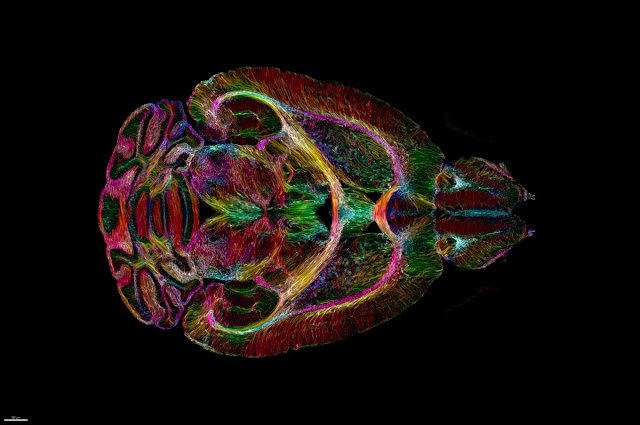
  After decades of work, scientists have managed to produce MRI scans of a mouse brain that are 64 million times sharper than previously achieved, providing new levels of detail to help us visualize conditions affecting the brain. Research was led by a team at the Center for In Vivo Microscopy at Duke University.  They used a much more powerful magnet within the scanner (9.4 Tesla versus 3), and gradient coils 100 times stronger than those in a normal MRI machine. The gradient coils produce the deliberate vibrations in the magnetic field, which permits localization of image slices as well as phase and frequency encoding. When using the new technique on a mouse brain, they also imaged the tissue using a complementary method called light sheet microscopy.  Overlaying these images allowed the team to see internal wiring and connections within the brain. The authors are especially interested in aging, and have documented changes in the connectivity across the brain as the mou...

Science is Fun Fridays!

Image
  A distinct layer of tissue has been discovered in the brain, and is one of four such membranes between the skull and the brain. The meningeal layer consists of the dura, arachnoid, and pia mater membranes.  The latest addition divides the subarachnoid space, which contains cerebrospinal fluid (CSF). It is called the subarachnoid lymphatic-like membrane and appears to separate clean CSF from dirty CSF that contains cells' waste products. CSF surrounds the brain and spinal cord, acting as a shock absorber as well as providing immunological protection to the brain.  It also serves a vital function in the regulation of cerebral blood flow. The SLYM was found to be packed with immune cells, which can use the membrane to surveil the CSF for signs of infection or inflammation. Tears in the SLYM can lead to these cells entering the brain, possibly explaining prolonged inflammation following injury.  There may also be implications for Alzheimer's, as a rupture could explain...

Science is Fun Fridays!

Image
  Researchers are investigating how the deficiency of a gene in immune cells plays a role in Alzheimer's disease. The brain's immune cells are called microglia, and they found when deleting a particular gene, CX3CR1, the microglial cells were impaired in their movement towards plaques. Plaques are created by amyloid beta proteins that clump together and destroy nerve cell connections.  The dysfunction in the microglia occurs earlier in the disease course, which results in a cascade of neurotoxic events in the brain. "CX3CR1 has been shown in both past human and animal studies to be downregulated in neurodegenerative diseases when microglia are activated." "This research pinpoints how we can target this cell type early in the disease in order to modulate how the disease progresses," says Shweta Puntambekar, MS, Ph.D. Neuro

Science is Fun Fridays!

Image
  We know that the cerebellum coordinates muscle movements, but researchers at the University of Basel have discovered that it also plays an important role in remembering emotional experiences. The cerebellum is part of the hindbrain, sometimes called the primitive brain, so this information makes sense from a survival standpoint. Higher up, the amygdala is known for its role in processing emotions.  It is, in fact, activated by emotions, then facilitates the storage of information in the cerebrum. Participants were shown positive, negative, and neutral images while the researchers recorded their brain activity using MRI.  It was during the memory test that they saw increased activity in the cerebellum, related to the improved storage of the emotional images. They also saw that the cerebellum showed stronger communication with various areas, such as the cingulate gyrus, which is important in the perception and evaluation of feelings. These findings may help in further und...

Science is Fun Fridays!

Image
  It is estimated that about 12 million adults suffer from PTSD in a given year, and the numbers are expected to grow.  Researchers have been studying psychedelic therapies in combination with counseling and psychotherapy. "Both the psychotherapy and the drug treatment have an effect independently, but they often work together synergistically," says lead author, Dr. Xenia Gonda. However, it is not the psychedelic nature of the drug that makes a difference, it works by enhancing the actions of psychotherapy at a neurological level. They found the most promising results from MDMA, or ecstasy.  Four trials showed significantly superior outcomes to those of patients only receiving psychotherapy. Psilocybin, found in certain mushrooms, also showed some benefit, but they state additional data is still needed to validate. While this study was done in Hungary, FDA approval is expected next year for these drugs to be used in assisted therapies in the USA. Neuroscience News

Science is Fun Fridays!

Image
 By now, you may have seen this illusion on the internet.   Perceived by 86% of people as an expanding black hole, this new to science illusion is strong enough to cause pupillary dilation as if we're walking into a darkened room. I'm pretty sure my eyes are being tricked as I'm typing this with the image above. The reflex depends on perception, as opposed to reality.  Here, the elements of light and dark are imaginary, meaning the eye adjusts not simply to physical energy. Researchers did evaluate reactions to other colors as well, and found that black appeared most effective. Further studies wish to understand why a percentage did not experience the expansion and dilation, although the strength of the illusion differed markedly among those who did. Neuroscience News

Science Fridays!

Image
  We're dropping the fun again so as not to make light of the condition, which has been in the news recently following actor Bruce Willis announcing his retirement due to diagnosis. Aphasia is caused by brain injury, a lesion in a specific area that affects the ability to communicate. Broca's aphasia prevents a person from forming clear words or sentences. Wernicke's aphasia prevents a person from understanding other people, or even oneself, when speaking. Global aphasia involves damage to both language areas. Approximately 2 million people in the US live with aphasia, and at least 250,000 in the UK. More people have aphasia than have cerebral palsy, multiple sclerosis, Parkinson's, or muscular dystrophy. National Aphasia Association

Science is Fun Fridays!

Image
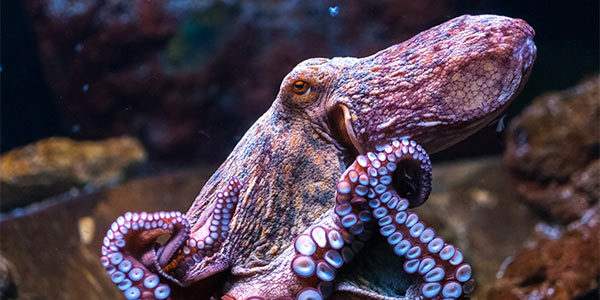
  Did you know an octopus has nine brains?? They have a central brain in their head that controls the nervous system, and also a small brain in each arm, which allows them to work independently toward the same goal. Scientists have found that the octopus brain contains high levels of regulatory RNA molecules, which could help them develop lots of different neurons and greater neuronal complexity. "The only comparable [microRNA] expansions happened, strikingly, in vertebrates.  Thus, we propose that [microRNAs] are intimately linked to the evolution of complex animal brains."  MicroRNA regulate gene expression by binding to mRNA and preventing it from being translated to protein. The team studied 18 tissues of the common octopus, expecting to find RNA editing behind the cognitive abilities.  Instead, they found the miRNA as a contributing factor, most strongly expressed in nervous tissues and present in the brains of developing hatchlings. While brain size and texture...

Science is Fun Fridays!

Image
  Conceptual image of a neuron affected by multiple sclerosis (Stocktrek) It has long been suspected, but difficult to prove, that the Epstein-Barr virus is connected to multiple sclerosis.  We know that it is the primary cause of mononucleosis and that 95% of adults carry it. But MS is relatively rare. In the disease, inflammation damages the myelin sheath that insulates nerve cells, ultimately disrupting signals to and from the brain and causing a variety of symptoms, including numbness and pain to paralysis. Researchers at the Harvard T.H. Chan School of Public Health and Harvard Medical School ran an "experiment of nature."  Using two decades of blood samples from more than 10 million young adults on active duty in the military, they found about 5% were negative for Epstein-Barr, while 955 eventually developed MS. They determined that the risk of MS increased 32-fold after infection with Epstein-Barr but not after infection with other viruses. Immunologists William Ro...

Science is Fun Fridays!

Image
  A brain computer interface company called Synchron has announced the first direct-thought tweet. Phillip O'Keefe is a 62 year old man from Australia who has been paralyzed by ALS.  In April 2020, after his condition deteriorated, he was fitted with an endovascular Stentrode brain-computer interface.  This enables patients to wirelessly control digital devices through thought. How? A node is implanted in the brain via the jugular vein in the neck, and it sits on the motor cortex where it can pick up on brain signals.  The user can look at a screen with a keyboard on it and envision which letter they want to type.  Through a device placed on the chest, a machine learning algorithm will then process the brain data and translate those signals into specific commands. "The system is astonishing, it's like learning to ride a bike - it takes practice, but once you're rolling, it becomes natural," says O'Keefe. Synchron was very happy with the response the tweet rece...